Betaaljournaal 11
Newsletter Dutch Payments AssociationI hope you all had a great summer, at home or abroad, in good health with your loved ones, despite corona, disappointing weather, wildfires and flash floods. Hang in there a little longer, keep washing your hands and keep your distance. Thankfully there is some light at the end of the corona tunnel. It looks like we will be able to meet in person more often from now on. I look forward to that. Maybe we will see each other at Money 20/20, at Euroforum or at our Annual Conference on November 18. We have to see what the authorities will recommend at that moment, but I have high hopes. In this late summer edition of Betaaljournaal, we highlight a number of recent activities. Read about the renewed Bank Switching Service, for example, about initiatives for accessibility by our members and about number spoofing and WhatsApp scams.
Gijs Boudewijn, director a.i.
In this edition:
- Bank Switching Service renewed
- Update for our segmentation research
- Accessible payments for everyone
- Inserting payment cards on the way out
- The Netherlands as benchmark
- Number spoofing and WhatsApp scams still on the rise
- Digital fall back alternatives for debit card payments
- Figures
- Agenda
- More events and activities
Bank Switching Service renewed
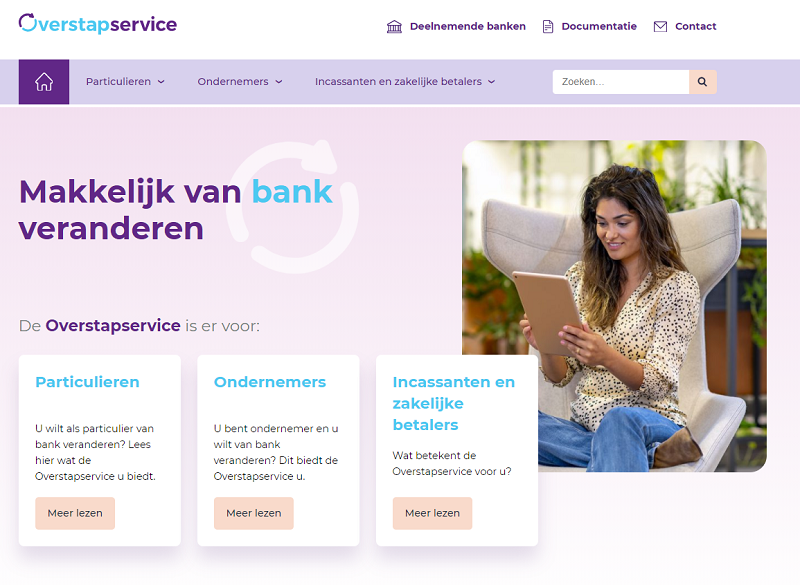
Overstapservice.nl(the Bank Switching Service website) has had a major makeover. The website has a new, fresh look & feel, and meets modern requirements for responsiveness, speed and navigation.
Last year, the Bank Switching Service itself was upgraded with extra functionality. The most important new feature: “Betaler Informeren Bij Initiatie” (BIBI). With BIBI a bank interactively informs payers and billers about a new payment account with every credit transfer or direct debit to an old discontinued account. A payer can use this to update the personal list of payees at his or her bank and a biller can update its customer records. With the improved Bank Switching Service someone who switched banks very rarely needs to inform a payer or biller his- or herself.
All major consumer banks have implemented BIBI in their mobile banking apps and internet banking environment. Currently, BIBI for batch payments is also being implemented.
Update for our segmentation research
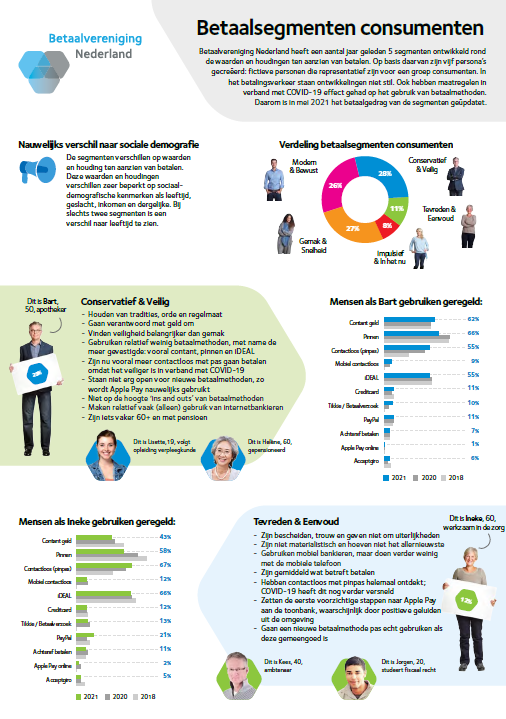 Why do some consumers use certain payment methods and other consumers not (yet)? Some years ago the Dutch Payments Association identified five population segments around values and attitudes towards payments. These five segments each represent a group of consumers. Developments in the payment system and their users do not pause. Therefore, new research was carried out to update the segments. View the infographic here for an update of the segments with the most important facts and figures (in Dutch).
Accessible payments for everyone
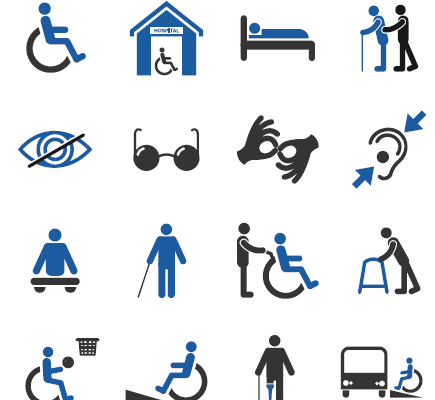
Accessible payments are payments for everyone. Banks try to make (digital) banking as user-friendly as possible for all their customers. More and more customers use internet banking, mobile banking and electronic payments in shops. Therefor, banks also care for vulnerable people. They offer specially adapted services, well trained coaches, training courses, online video banking and mobile advisors. In addition, banks work closely with (local) initiatives of various institutions and organizations, such as libraries, associations for the elderly, charities and cummunity centers. We will report on this more often in the coming weeks running up to the Accessibility Week from 4 to 8 October. A selection of the activities of banks for accessibility is already available on our website (in Dutch).
Inserting payment cards on the way out
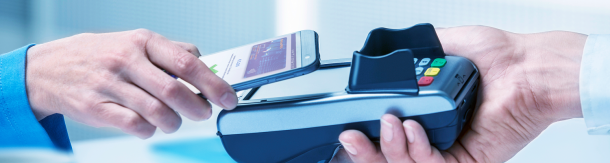
A growing number of cardless payments using smartphones, smart watches or wearables is processed at the checkout. They are now more common than inserting a payment card into the payment terminal. The growing success of contactless payment with smartphones and smart watches seems to be mainly due to the introduction of Apple Pay for iPhones and Google Pay for Android devices. Read more (in Dutch)…
The Netherlands as a benchmark
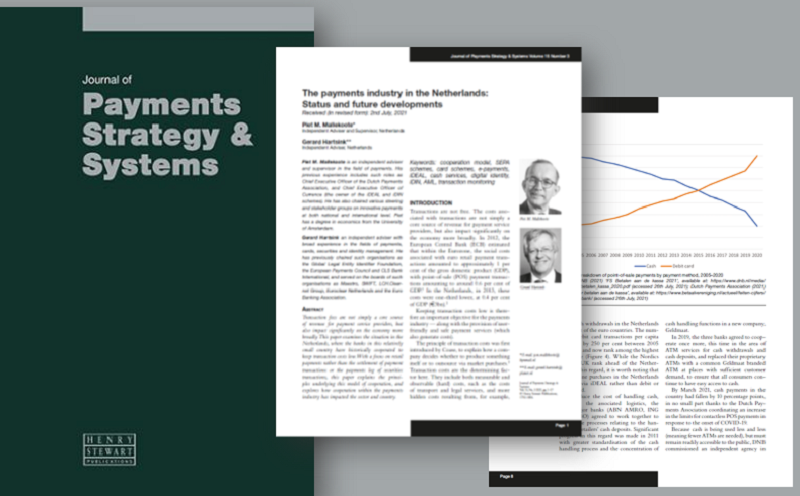
The Journal of Payments Strategy & Systemsis about to publish an article by former director of the Dutch Payments Association Piet Mallekoote and standardization expert and editor Gerard Hartsink. It is the first article in a series of articles on payments in the twenty member countries of the Financial Stability Board (FSB). For this, Piet has updated his article in Alledaags en Academisch(in Dutch) with the latest information on fraud in the payment system, Geldmaat and Transactiemonitoring Nederland. Gerard sheds a light on various standardization developments. In the next newsletter we will publish a link to the upcoming article.
Number spoofing and WhatsApp scams still on the rise
Despite many warnings, criminals still manage to deceive victims by posing as bank employees over the phone and at home. Or they pretend to be an acquaintance in distress who asks for money via WhatsApp. Banks, the police and other partners warn the public about these scams in many ways. On our website veiligbankieren.nl (in Dutch) we address both potential victims as well as relatives to pass on the message. Through social media, press releases, advertisements in magazines and special interest groups we want to reach as many people as possible. We need to stop these scams together. In a recent press release we debunked five spoofing myths:
- A bank never asks by phone or in a text message to transfer money
- A bank never asks to give a bank card to someone (at home)
- A bank never asks for access to a customer’s computer or smartphone.
- A bank never asks to send a bank card by post.
- A bank never asks for a PIN number verbally, in a message or on a website.
In this video from Safe Banking TV, our ambassador Marc explains how to spot and prevent WhatsApp scams (in Dutch).
Digital fall back alternatives for debit card payments
The Dutch Payments Association conducted research into digital fall back alternatives in the event of a serious disruption in card payments. The study included representatives of all stakeholders. The requirements in the various usage situations were leading. The outcome is that three alternatives could cover the Dutch situation.
The proportion of electronic payments in point-of-sale payment transactions in The Netherlands is high; 4 out of 5 payments is a debit card payment. All parties involved in card payment processing jointly ensure that the availability of the payment infrastructure is high and that consumers and retailers can rely on card terminals to pay. However, there are occasional disruptions that make debit card payments temporarily unavailable. When that occurs, cash is a fall back option. Because the use of cash is decreasing everywhere and less and less people carry enough cash (see research: DNB seeks new agreements on cash), cash is no longer a suitable fall back alternative. Hence the study on digital alternatives. In random order, we see the following alternatives:
- Deploying an additional terminal that is connected via another (mobile) network.
- Temporary local settlement of the transaction (Merchant Approved Transactions – MAT).
- Paying with a QR code.
There is no option that can be used appropriately in all cases. With this set of three as a basis, we are now discussing which steps are needed to make them available as a practical alternative to debit cards. This can absorb the declining role of cash as a fall back option for debit card payments.
Figures
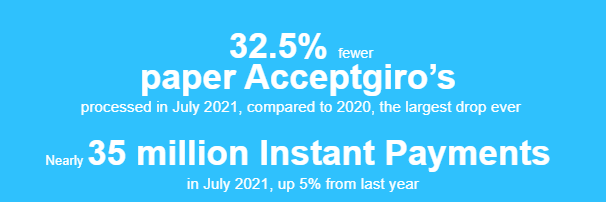
More figures? Visit factsheet.betaalvereniging.nl
Agenda
- Each month – Workshop Quantum computers
- 9 September – Future of Payments (in Dutch) with a 20% discount for members of the Dutch Payments Association via this link.
- 21 – 23 September – Money 20/20
- 4 – 8 October – Accessibility Week
- 18 November – Annual Conference 2021
More events and activities
After the summer we will organize another four day course on Applied Cryptography.
Member Bulletins
In addition to this Betaaljournaal, the Dutch Payments Association issues Member Bulletins. These bulletins usually appear a few times a month and relate to a specific topic. If you are a member and you do not yet receive these bulletins, you can subscribe to the mailing list via secretariaat@betaalvereniging.nl.
Subscribe to Betaaljournaal
For the latest developments in payments, stay informed via Betaaljournaal. You can register here: subscribe to Betaaljournaal