Betaaljournaal 15
Newsletter Dutch Payments AssociationAfter last summer, discussions were initiated that eventually resulted in a Cash Covenant, last week. I am pleased that the Covenant has now been agreed on and signed. These agreements ensure that cash remains available and accessible to everyone who needs it. The Covenant also states that DNB and the Ministry of Finance will investigate how the circulation of cash should be funded in the long run. This financing is a matter of great concern and we are the first in Europe to thoroughly investigate this question. I am eagerly looking forward to the outcome.
To make room for the study, banks decided to freeze their business and retail rates for depositing and withdrawing cash, for over a year. It is important that the ever-increasing gatekeeping charges and expenses of our members are addressed. Corporate bank customers in particular complain about the costs and we need to look at how we can keep these manageable.
In addition to the Covenant, we are busy in these recent weeks with the provision of payment accounts for Ukrainian refugees. You can read more about it in this newsletter.
Furthermore, Miriam Osten talks about the study on the revenues and expenses of payments for our members. You can also read about our joint study with DNB on Point-of-Sale Payments 2021 (Betalen aan de Kassa 2021) that was published this week. Enough to get you through the long Easter weekend ahead, I believe.
Gijs Boudewijn, Director a.i.
- Agreement on nationwide travel with contactless payment cards in public transport
- New Cash Covenant keeps cash available and accessible for the foreseeable future
- Ukraine: which payment services are available to refugees in the Netherlands?
- Effects of sanctions for card users from Russia and Belarus
- Update from Miriam Osten on McKinsey study – video
- Maximum amount at unstaffed fuel pumps raised to €200
- Research on the cost of payments in 2020: shops and restaurants pay €0.68 on average per online payment
- Point-of-Sale Payments 2021
- Online fraudsters increasingly target customers
- Consultations
- Stakeholder fora
- Project Debit Card Acceptance on track
- DNB Vision on Payments 2022-2025
- Consumers spend over €30 billion online in 2021
- Figures
- Agenda
- Other activities
Agreement on nationwide travel with contactless payment cards in public transport
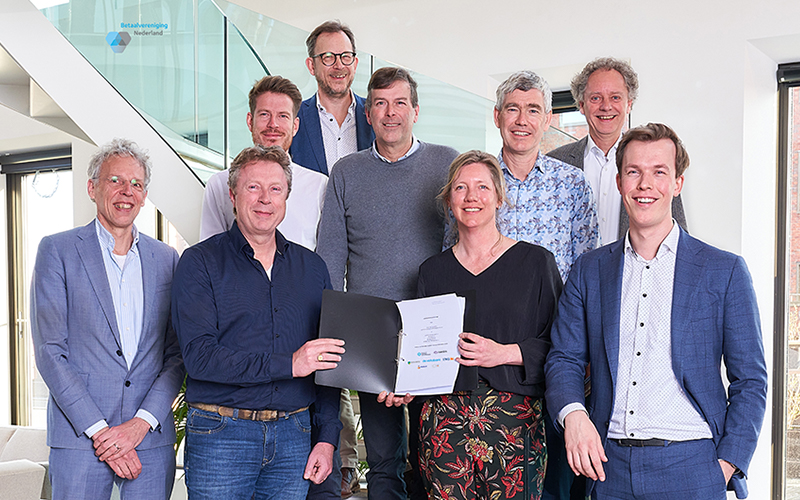
At the end of 2021, public transport organisations and issuing banks agreed to cooperate in the coming years to enable traveling with contactless payment cards in public transport. This was ratified by signing a formal agreement (see photo). The cooperation allows for a nationwide implementation.
The project kicked off in March 2021. Operator Arriva hosted the premiere in Lelystad. The experiences of both travellers and public transport operators have been positive. Travellers appreciate the convenience. They already carry their debit or credit card with them and no longer need to show a separate travel card.
In October, traveling with a payment card was introduced in the larger region of the Gooi and Vecht rivers. The experiences in that region will be used to make some improvements to both the technology and the public information.
In 2022, all public transport operators in the Netherlands will start accepting contactless debit and credit cards to check into buses, trams and trains. For the time being, only single journeys at full fare are possible. The agreement includes commitments on the use of payment cards with discounts and subscriptions in the near future.
New Cash Covenant keeps cash available and accessible for the foreseeable future
On 8 April 2022, the Minister of Finance Sigrid Kaag presented a Cash Covenant to the Dutch Parliament. Twenty-three organisations closely involved in the Dutch payment system signed this convenant. The aim of the agreement is to ensure that cash continues to function properly as a means of payment at cash registers, even if electronic payments keep increasing.
The Covenant was signed by the major banks, Betaalvereniging Nederland, consumer organizations, representatives for retailers, the hospitality industry and fuel stations, cash service providers and the Dutch central bank. It is valid for five years. Read the full article…
Ukraine: which payment services are available to refugees in the Netherlands?
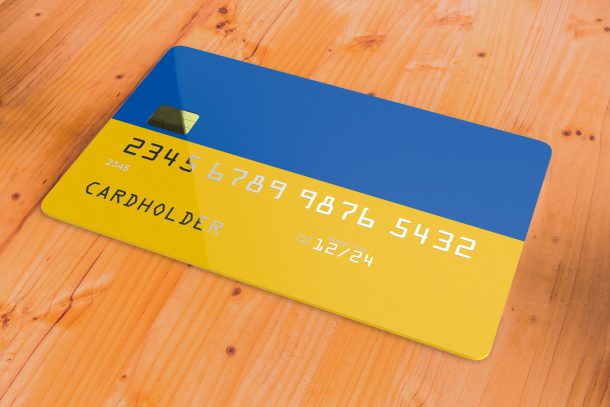
Refugees from Ukraine can easily open a payment account at banks and other payment service providers in the Netherlands. With a payment account they can receive allowances and wages. Every account comes with an IBAN, a debit card and internet and mobile banking.
Cash Ukrainian grivnas virtually cannot be exchanged within the eurozone. Ukrainians with a debit or credit card from Mastercard or Visa, can use them in shops and at ATMs across the EU, for the time being. Vice versa, debit and credit cards from the EU can be used in Ukraine, as long as the ATM or PoS terminal still works.
Effects of sanctions for card users from Russia and Belarus
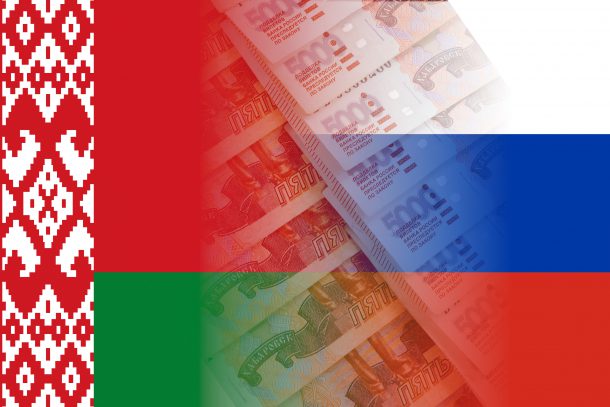
As of 12 March, most Russian banks are no longer accessible via SWIFT for all other worldwide SWIFT-participants. Of course, all Dutch banks comply with all official sanctions. As a result, any payment to a sanctioned counterpart in Russia or Belarus is virtually impossible via a Dutch bank. The advice to Dutch business and private bank customers is: for the time being, do not conduct any payment transactions with an institution, company or person in Russia or Belarus without consulting your bank. Start by consulting the website of your bank.
Mastercard and Visa have completely ceased their services in Russia. Russians with credit or debit cards from these brands can no longer use them outside Russia. Cardholders from other countries with cards of these two brands can no longer use them in Russia. This also applies to Maestro and V PAY cards.
- News item (in Dutch)
- Giro transfers to and from Russia and Belarus (in Dutch)
Study on payment system costs – Miriam Osten
Miriam Osten is Manager of Information & Communication at the Payments Association. She updates us on a major project we are running this year: the study on the costs and benefits of the payment system for financial institutions.
Maximum amount at unstaffed fuel pumps raised to €200
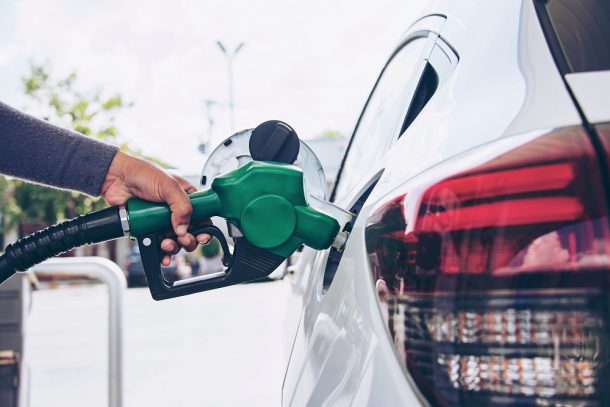
All Dutch banks and their transaction processors have agreed to increase the pre-authorisation amount for card payments at unstaffed self-service fuel station to €200 per transaction. All card issuing banks are ready for this higher pre-authorisation amount. The Dutch Payments Association coordinated the required change between all the involved parties.
Read the full report…(in Dutch).
Research on the cost of payments in 2020: shops and restaurants pay €0.68 on average per online payment
The Dutch Payments Association and Dutch retail organisations (retailers, the hospitality industry and fuel stations) commissioned a research on the costs of online payments for small and medium sized physical shops and restaurants that also have a web shop. They pay 68 eurocents on average for an online payment. This is considerably higher than the average cost of a payment at their cash registers . On average, the cost is 26 eurocents per payment with a debit card, credit card or with cash.
Read the full article… (in Dutch).
Point-of-Sale Payments 2021
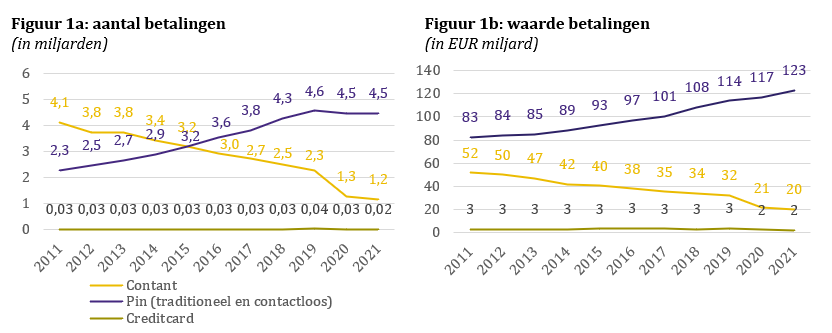
In 2021, the number of payments with debit cards has hardly changed, but how these payments are made is changing fast. Dutch people increasingly pay contactless, both with a cards and without a card (with a smartphone, smart watch or other wearable device).
The use of cash has remained stable in 2021: one in five payments was made using cash. This share is significantly higher for people with a lower income. They paid almost one in three PoS purchases with cash. This is evident from a joint survey conducted by Betaalvereniging Nederland and De Nederlandsche Bank. Read the full article…
Online fraudsters increasingly target customers
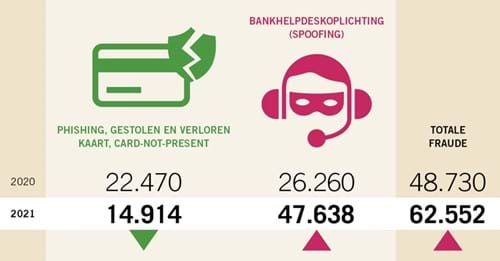
The total damage for banks from fraud in the payment system, increased from almost €50 million in 2020 to €62.5 million in 2021. The damage from bank helpdesk fraud in particular, rose to €47.6 million. However, the damage from other forms of fraud such as phishing and stolen bank cards actually decreased in 2021. Read the full press release…(in Dutch).
Consultations

RfP for a consultant to define a business model for the SEPA Payment Account Access (SPAA) Scheme
In November 2021, the EPC Board accepted the invitation of the Euro Retail Payments Board (ERPB) to act as scheme manager for a SEPA Payment Account Access (SPAA) scheme.
The EPC invites interested parties to submit a proposal for establishing the detailed cost methodology for such a fee model. Proposals can be submitted until 22 April 2022. Please find all documentation and more consultations of the Dutch Payments Association here (in Dutch).
Stakeholder fora

The Dutch Payments Association is engaged in various stakeholder fora (in Dutch). These fora address issues that play a role in different areas of the payment system. These are some of the fora:
- Giro stakeholder forum – Dutch Payments Association
The Giro Stakeholder Forum monitors efficient processing, (further) standardisation and security of the giro-based payment system. - Point-of-Sale forum – Dutch Payments Association
This forum discusses all issues that arise at the physical cash register, especially debit card and cash payments. - National Forum on the Payment System (NFPS) – Dutch Central Bank
The NFPS keeps a close eye on the accessibility of payment services and takes action where necessary. This forum also underlines that it is important for society that cash continues to function properly as a means of payment at points-of-sale. - The Euro Retail Payments Board – ECB
The ERPB is a strategic consultative board charged with promoting the integration, innovation and competitiveness of retail payments in the European Union. - The European Forum for Innovation in Payments – EC/ECB
The EFIP is an informal initiative of the European Central Bank and the European Commission. The objective is to increase economic efficiency and deepen the internal market by fostering a competitive market for European retail payments.
Project Debit Card Acceptance on track
Supervised by the Dutch Payments Association, the project for the acceptance of Debit Mastercard and Visa Debit is on track. Terminal software and acquiring host systems have been modified and integration testing is currently in full swing. It is expected that the flow for acquirers will be technically ready for the acceptance and processing of Debit Mastercard and Visa Debit in the second quarter.
Banks will come up with offers in the second quarter. ING and Rabobank(both in Dutch) have already set up a landing page for their customers. Both banks communicated that the fees for Debit Mastercard and Visa Debit will be the same as those for Maestro and V PAY. Also, the Payments Association provides free promotional materials for display in shops. This conveniently shows users of a Debit Mastercard or Visa Debit card whether their card is accepted.
Acquiring banks will activate Debit Mastercard and Visa Debit for their customers in the second half of this year. It is expected that by the end of 2022, payments with Debit Mastercard and Visa Debit will be possible almost everywhere in the Netherlands. Initially, these cards wil mainly be used by foreign tourists, but from 2023 onwards Dutch cardholders will also use these cards more frequently.
DNB Vision on Payments 2022-2025
The Dutch Payments Association endorses the comprehensive Vision on the Payments presented by the Dutch Central Bank on 29 March. It provides clarity to all social stakeholders and guidance in the years ahead.
DNB rightly points out that continued digitization also has major consequences for the payment system. Virtually all the topics that DNB addresses in its Vision are in line with the mission and objectives of the Dutch Payments Association, notably with a safe, reliable, efficient and accessible payment system. Read the full article… (in Dutch).
Consumers spend over €30 billion online in 2021
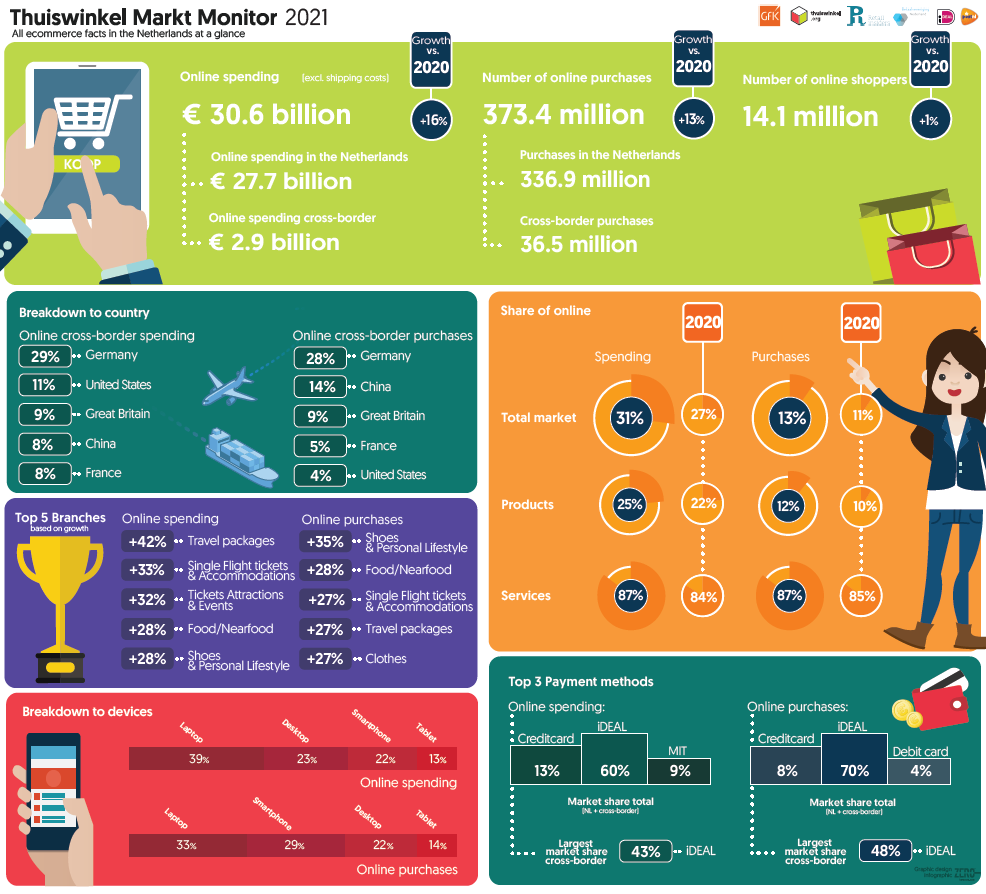
The online spending of Dutch consumers reached €30.6 billion in 2021, an increase of 16% compared to 2020. There were 373 million online purchases, a growth of 13% compared to 2020.
The share of online purchases is 31% of total spending. This is apparent from the latest figures from Thuiswinkel Markt Monitor, the survey about online consumer purchasing and spending in the Netherlands. This research is conducted by GfK, commissioned by Thuiswinkel.org and Retail Insiders and in cooperation with PostNL, the Dutch Payments Association and Currence. Read the full article…
Figures
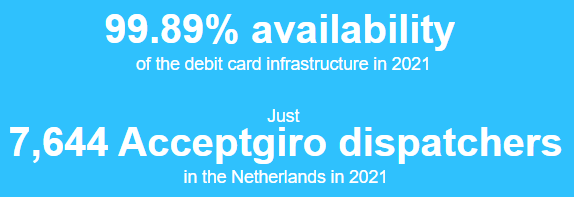
More figures? Visit factsheet.betaalvereniging.nl.
Agenda
- 19 May – Annual Conference Dutch Payments Association Netherlands: Everybody Digital? Sign up here.
- 30 June – Stakeholder meeting (cards/giro)
- 29 September – Member meeting
- 10-13 October SIBOS RAI Convention Centre Amsterdam
- 13 October – Stakeholder meeting
- 17 November – General Members’ Assembly