
Betaaljournaal 5
Newsletter Dutch Payments AssociationHopefully you all enjoyed a great summer vacation. Most of you have started to work again. Mostly online, just like before the summer. I would have liked to meet all of you in person again soon, but that is postponed for the time being, given the guidelines of the government. That is why we have several online activities in store for you in the near future. We will send you a personal invitation by mail. And for those who can’t be there, there is always the report on our website.
In this newsletter you can read about developments surrounding Instant Payments, the Cyber Security Assessment of the Netherlands 2020, the end of the Central Account Number Administration and our colleague Remco Ruiter talks about smishing. Enjoy reading it!
Piet Mallekoote, Director
In this Betaaljournaal:
- Instant Payments
- Cyber Security Assessment Netherlands 2020
- Termination of Central Account Number Administration
- Security for Senior Citizens campaign
- Response to consultations in the Netherlands and Europe
- Update on smishing
- More events and activities
- Stats
- Agenda
Instant Payments

July: new monthly record for Instant Payments
Between various Dutch banks more than 33 million Instant Payment transactions were processed in July. This set a new monthly record. The number of Instant Payments during the weekend is also growing steadily. Saturday 25 July, with over 1 million transactions, became a top 3 weekend day.
ECB: settlement of Instant Payments via TIPS
The ultimate goal of Instant Payments is to enable EU citizens to make real-time electronic payments in euros anytime, anywhere, from and to any euro country, both among themselves (with regular credit transfers), in physical stores (e.g. with a smartphone), and online (e.g. in webshops).
A precondition is that all roughly 6,000 banks in the euro zone can reach each other with Instant Payments. To promote this interoperability between different banks, the European Central Bank launched a separate settlement interface for TARGET2 in November 2018: TARGET2 Instant Payments Settlement (TIPS). In addition, on 24 July the ECB announced that all payment service providers connected to TARGET2 (mainly banks) and participating in SCT Inst (the standard for Instant Payments in the euro zone) should start using a so-called liquidity account with TIPS, preferably before 2022. Exactly what this entails for banks, should become clear in the run-up to 2022.
Liquidity accounts to securely hedge Instant Payments
A liquidity account in TIPS is a kind of escrow from a bank for outgoing Instant Payments that have already been delivered to the final beneficiaries at other banks but which could not yet be settled between the banks concerned via TARGET2. Instant Payments are fully settled immediately, 24 hours a day, 7 days a week between payer and payee, whereas TARGET2 can only settle positions between banks on business days, during business hours, a few times a day.
Interbank settlement via TARGET2 and TIPS
Traditionally, TARGET2 settles all euro payments between different banks in the euro area at the ECB, on business days, a few times a day. For Instant Payments, something extra is needed to bridge the gap between two periodic settlements via TARGET2. This is possible with TIPS, among others.
Automated Clearing Houses as an alternative to TIPS
In addition, commercial automated clearing houses (ACHs) connected directly to TARGET2, offer solutions for secure settlement of Instant Payments between different banks, such as equensWorldline and EBA Clearing. ACHs can distinguish themselves from TIPS with additional features on top of the SCT Inst standard, such as faster processing (faster than 10 seconds).
All ACHs offering Instant Payments according to the SCT Inst standard should preferably also link their interbank settlement systems to TIPS in a manner to be determined before 2022. This should enable, within a few years, that all banks in the EU offering Instant Payments become mutually reachable, including banks that run their IPs through the various commercial ACHs.
European Payments Council: reachability of payment accounts for Instant Payments
On 7 August, the European Payments Council (EPC) announced that 56% of all participants in the classic SEPA Credit Transfer (SCT) now also participate in the SEPA standard for Instant Payments (SCT Inst). This also means that 44% of classic SCT participants have not yet implemented SCT Inst. The EPC states that all payment accounts with a bank that participates in both payment standards must be reachable for both SCT and SCT Inst, for all incoming payments.
Cyber Security Assessment Netherlands 2020
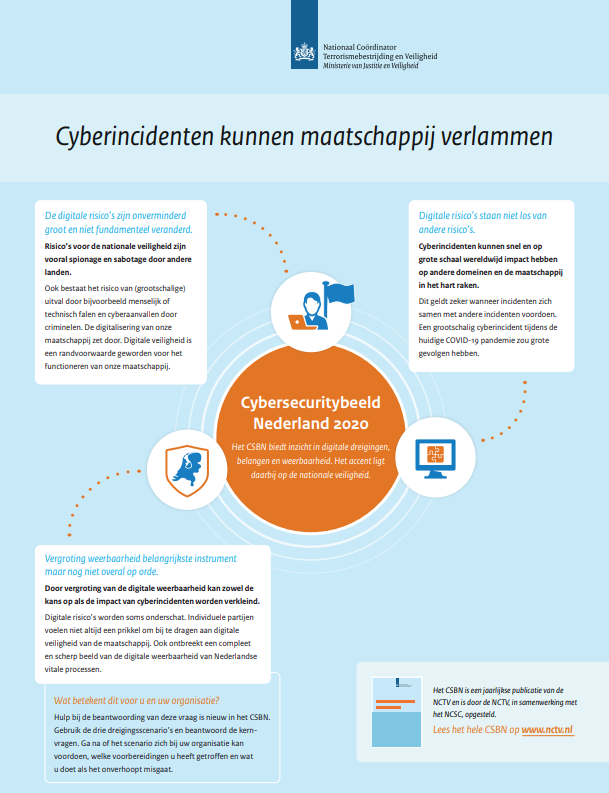 In June the annual Cybersecurity Assessment Netherlands (with Dutch acronym CSBN) by the National Coordinator for Counterterrorism and Security was released in close cooperation with the National Cyber Security Center. The CSBN 2020 shows that there are still vulnerabilities, but also digital opportunities. Our society is largely dependent on digital processes. COVID-19 has increased this dependency. Analog fallback options are not always available and the probability of higher impact digital incidents is therefore increasing. In the past year, several incidents have occurred that illustrate the findings of the CSBN 2020, such as the Citrix-incident, ransomware at Maastricht University and the unreachability of the 112 emergency number due to a malfunction at KPN.
Read the complete Cyber Security Assessment Netherlands 2020 (in Dutch) …
Termination of Central Account Number Administration
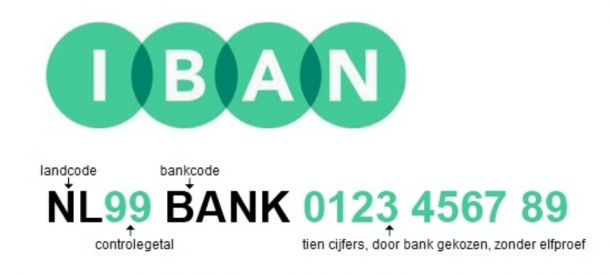
With centrally issued account numbers it was ensured for decades that the last 10 positions of all Dutch IBANs:
- always complied with the so called “eleven proof” and
- were always unique for each IBAN throughout the Netherlands.
This arrangement originated in the pre-SEPA era and its life span was limited because the supply of unused account numbers would eventually run out.
In recent years, various projects were underway for a different, more efficient approach to issue new IBANs, for banks and payment services that used the Dutch Central Account Number Administration. On 1 July, we quietly flipped the switch and decades of Central Account Number Administration came to an end. Payment service providers (mostly banks) can now autonomously create and issue Dutch IBANs in accordance with the ISO standard 13616 for IBANs.
For these new self-issued Dutch IBANs, the country code will always be NL, followed by two check digits. This is followed by the four-letter Dutch bank code, which is different for each bank. The last 10 positions of a new Dutch IBAN can now be fully determined by each bank. As a result, from now on two different IBANs from two different banks may be the identical for the last 10 digits following the bank code.
Security for Senior Citizens campaign
 On 1 September 2020, the Ministry of Justice and Security will launch the Security for Senior Citizens campaign, providing recommendations for paying securely and what to do in case of payment fraud, amongst others. With the slogan ‘Don’t make it too easy for scammers’, during four weeks, various kinds of fraud are highlighted: spying on PIN-codes, confidence tricks, online assistance scams (via WhatsApp, for example) and phishing. Various organizations will circulate the campaign through their own channels. We will circulate the campaign through veiligbankieren.nl, of course (in Dutch).
Response to consultations in the Netherlands and Europe

The Dutch Payments Association regularly represents its members for collective interests in payments, with national and European consultations, for example. There were plenty of those this summer. Amongst others, the European Commission asked for input from stakeholders on their coming Retail Payment Strategy. The EC is expected to publish this strategy in the third quarter of this year. The Dutch Payments Association and its members, provided input on this consultation, as did more than 180 other institutions and individuals. One of the messages we conveyed to the EC: further European harmonization of payment transactions is desirable and should offer a step forward for all EU member states. Convergence towards a world-leading payment infrastructure should be the European ambition.
Interchange fees
In the Netherlands too, an important consultation took place for the payment infrastructure. In December of this year, the existing regulation that limits domestic interchange fees for debit card payments (the interchange fee that benefits the card issuer in the case of a card transaction) will expire. The scheme that replaces it, was released for consultation by the Ministry of Finance in July. The proposal (in Dutch) sets a maximum of two cents per individual transaction. The Dutch Payments Association responded in close cooperation with its members. We argued that the existing market practice of bilateral tariff agreements (lower than the legal maximum) should remain possible under the new regulation.
European Data Protection Board
To conclude, the summer also brought a consultation of the European Data Protection Board (EDPB). In July it published draft guidelines that address the interplay between PSD2 and AVG. These guidelines are intended to clarify the complex interrelationship, possibly with far-reaching implications for the use and processing of account information by PSD2 payment service providers. Together with the privacy experts of our members, the Dutch Payments Association will respond directly and also provide input for the response of European umbrella organizations.
Update on smishing (in Dutch)
Remco Ruiter is Liaison Officer Public-Private Partnership at the Dutch Payments Association. He talks to us about smishing and other telecom-related fraud.
More events and activities (in Dutch)
Stats
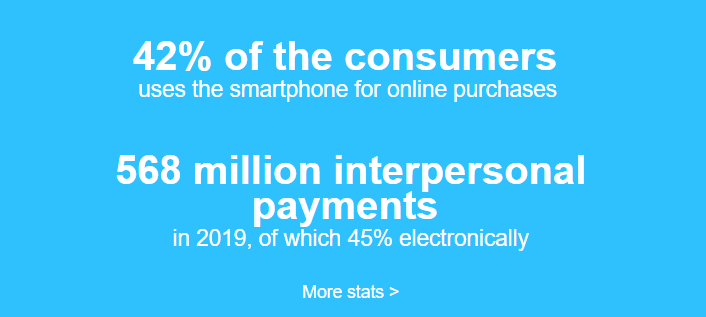
More stats? Visit factsheet.betaalvereniging.nl
Agenda
- 14 september – Free lunch met Inge van Dijk en De Nieuwe Knikkers, de uitnodiging heeft u per mail ontvangen.
- 5 t/m 8 oktober – SIBOS
- 27 oktober – Betaalvereniging Seminar Informatiebeveiliging
- 12 november – Betaalvereniging Jaarcongres, de uitnodiging ontvangt u per mail.
Member Bulletins
In addition to this Betaaljournaal, the Dutch Payments Association also issues Member Bulletins. The bulletins usually appear a few times a month and relate to a specific theme. If you are a member and you do not yet receive these bulletins. You can subscribe to the mailing list via secretariaat@betaalvereniging.nl.
Subscribe to Betaaljournaal
Also curious about the latest developments in payment transactions? Stay informed via Betaaljournaal. You can register here: