Betaaljournaal 7
Newsletter Dutch Payments AssociationThis edition of our Payment Journal includes a review of our Annual Conference and the General Assembly (ALV) and is published while payment systems are running overtime. The systems are sufficiently scaled and no major IT changes are planned during this period. It is comforting to see that payments run smoothly. Volume records are broken, notably on Black Friday.
Despite the government’s advice to only visit physical stores for necessary groceries, there are also plenty of purchases in stores for Saint Nicholas (5 december) and Christmas. They cautiously maintain proper social distancing and try to wrap up the year successfully, despite all restrictions.
I wish you all a Merry Christmas. You may have heard that I will be retiring as general director of the Dutch Payments Association and Currence in early 2021. I hope to meet you all – probably online – at the farewell symposium on Thursday morning February 11th or during the videochat drinks later that day. For now: enjoy reading!
Piet Mallekoote, Director
In this edition:
- Annual Conference on 12 November 2020
- Tackling bank caller-ID spoofing
- Invitation to Request to Pay survey
- Brexit and SEPA payments as of 1 January 2021
- SCA: deadline remains 31 December 2020
- Results Social Consultation Payment Transactions
- Update: Roadmap of the Dutch Payments Association
- More events and activities
- Agenda
- Figures
- Association news
Annual Conference on 12 November 2020
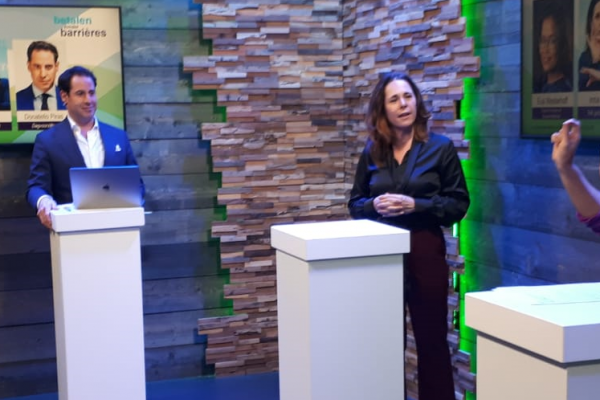
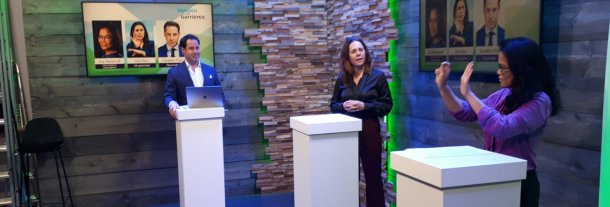 Digitization contributes to an accessible payment system, but unfortunately not for everyone. The current and future payment solutions should be accessible to as many people as possible. That was the topic of our Annual Conference. Moderated by Donatello Piras, several speakers explained the current obstacles to people with disabilities and how they can be improved. Watch the full recording of the entire conference or the special episode of betaalTV (in Dutch).
Tackling bank caller-ID spoofing
in cooperation with the telecom sector
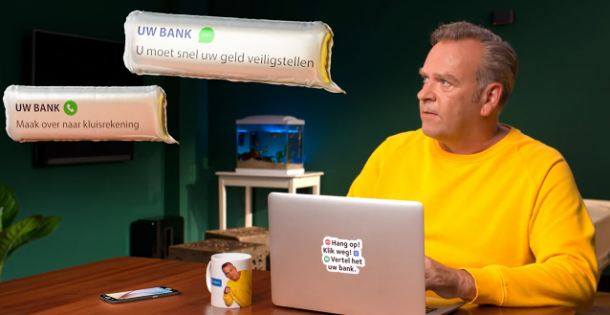
Bank caller-ID spoofing is a major problem these days. Consumers think they are being called by someone from their bank, but in fact it is a criminal who tells them to transfer money to a ‘safeguarding account’.
The financial sector is doing everything in its power to prevent this fraud, by taking its own measures and by cooperating with other parties, such as the police, the Public Prosecutor’s Office and the telecom sector. This cooperation, coordinated by the Dutch Payments Association, helps to obstruct criminals making phone calls supposedly on behalf of a bona fide business. We expect positive results from this cooperation, contributing to a reduction of this kind of fraud.
In addition, the banks are targeting their customers with specific safety information and we are constantly communicating through the collective information campaign Veilig Bankieren (safe banking). This campaign explains customers how to recognize spoofing and how to avoid becoming victims themselves. In a special TV commercial, consumers are warned against spoofing. The commercial is on air until 13 December. The key message in the commercial is that banks never ask their customers to transfer money to a special safeguarding account.
Invitation to Request to Pay survey (from ABE-EBA)
We kindly invite you and relevant customers to participate in the ABE-EBA Request to Pay survey to support the introduction of Request to Pay within SEPA. With a Request to Pay* the payee sends structured payment data electronically to the payer before money is actually transferred. This is a two-step process:
- A request to pay sent to the payer.
- The opproval (or refusal) of this request by the payer.
Thanks to the structured payment data, the payer can easily identify the payee and the amount to be paid. The payee can process the payment more easily.
The research focuses on experts in various relevant disciplines, including corporate treasurers, e-commerce and m-commerce specialists and other experts involved in payment processes. Please visit ABE-EBA Request to Pay survey to participate in the survey.
*For detailed information: please refer to the 2021 SEPA Request to Pay rulebook version 1.0 recently published by the European Payments Council (EPC).
Brexit and SEPA payments as of 1 January 2021
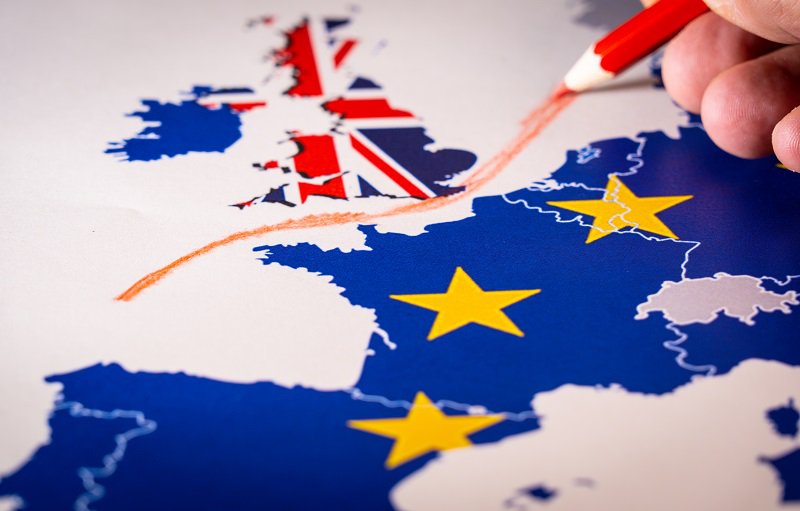
On 31 January 2020, the United Kingdom formally left the European Union and entered a transition period of 11 months. As a result, until 31 December 2020, the UK is a country that formally is outside the European Economic Area (EEA) but temporarily remains part of the European Single Market and the European Customs Union.
Limited changes in payment transactions as of 1 January 2021
Until 31 December 2020, there are no changes to SEPA payments (SEPA Credit Transfers and Direct Debits, SCTs or SDDs) to and from the UK.
As of 1 January 2021, following the transition period, the UK will be completely outside the EEA, regardless of whether or not a post-Brexit trade deal is concluded between the EU and the UK. However, the UK will remain within SEPA, the Single Euro Payments Area. SEPA payments (SCTs and SDDs in euros) with the UK will therefore remain possible, although additional information about the (bank of the) payer or payee will have to be added.
Read our full press release (in Dutch)…
Strong customer authentication for card payments on the Internet: deadline remains 31 December 2020
In a webinar on 19 Novemberof the European Payment Institution Federation (EPIF), Dirk Haubrich, the Head of Conduct of the European Banking Authority (EBA), reaffirmed that the deadline for Strong Customer Authentication (SCA) for card payments remains unchanged at 31 December 2020. No later than that date, 15 months after the original deadline, everyone in the card payment chain must be equipped to comply with the SCA provisions of PSD2. National regulators who fail to comply with the SCA provisions after the deadline are violating PSD2, the EBA warns. The Netherlands is sticking to the deadline. Read more…
Results consultation National Forum on the Payment System
- Corona influences consumers’ payment behavior and experience in the Netherlands, but does not damage confidence in banks.
After a rapid decline in purchases by Dutch consumers at the start of the first lockdown in March 2020, a strong recovery initially followed. Last July and August was slightly less than last year, but in September and October the total value of spending at counters and online was higher than the year before. - Current developments in cash provisions
The accessibility of cash remains high. The Interim Report on the accessibility of ATMs and cash deposit facilities 2020 shows that by mid-2020 99.51% of households in the Netherlands had access to an ATM within a 5 kilometer radius. Coverage for cash deposit facilities was 94.91% by mid-2020. - Migration to Strong Customer Authentication (SCA) when paying by card for online purchases
The MOB has been informed about the progress of the migration by banks, acquirers and merchants to meet the PSD2 requirement of Strong Customer Authentication for online card payments by the end of 2020. - WhatsApp friend support scams and bank caller-ID spoofing
The MOB has been informed about WhatsApp friend support scams and bank caller-ID spoofing, asking participants to continue informing their constituents about these forms of fraud. - Read the full article (in Dutch)
Update: Roadmap of the Dutch Payments Association
The Roadmap 2021-2023 provides an overview of the challenges and goals for the Dutch payment system for the next three years. Watch our colleague Michel van Bommel, Senior Policy Advisor Strategy & External Affairs, talking about the roadmap (in Dutch).
More events and activities
- betaalTV iDEAL 15 years (in Dutch)
- Webinar iDEAL 15 years – Augmented Reality and Virtual Reality
- Infographic iDEAL 15 years (in Dutch)
- Webinar ISO2022 (in Dutch)
Agenda
- From 27 november onward every month – Workshop Quantum computers
- 1 januari – Start introduction SCA
- 11 februari Farewel to Piet Mallekoote, Director Dutch Payments Association and Currence
Figures
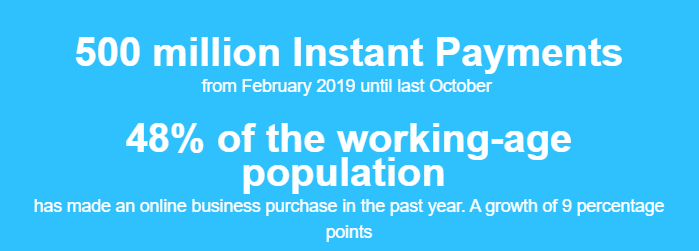
More figures? Visit factsheet.betaalvereniging.nl
Association news
General Meeting of Members (ALV) 12 November
This year the first General Assembly took place on November 12, prior to the annual congress. It was a digital meeting because of the corona measures. The statutes of the association prescribe a physical meeting and the emergency law allowing digital meetings was later, the ALV scheduled for May this year could not take place. The agenda items for that meeting have now been discussed. This mainly concerned the approval of the annual accounts for 2019 and the discharge of the board members for their board activities in 2019.
The agenda of the ALV also included the appointment of:
- Guus Slik as independent board member and successor of Henk van den Broek;
- Frank Stockx, nominated by ING;
- Daniël Köhler of Triodos Bank, nominated by the smaller banks to succeed Edwin Hartog.
The ALV has appointed the candidates as board members. The appointment is deemed to take effect as of May 2020. The chairman has thanked the board members who have stepped down for their commitment and involvement, in particular Henk van den Broek, who has been a member of the board since the foundation of the Dutch Payments Association. Also on the agenda was the reappointment of Anne Marie Magis, Alexander Baas and Lex Hoogduin. The ALV reappointed the three board members for a term of three years.
Another item on the agenda was the change in the contribution system. Core of the proposal:
- The three largest banks will each pay 29% of the contribution in 2022 (= 87% in 2022 instead of 90% in 2019). They will only pay a fixed amount;
- The smaller members will pay both a fixed amount and a variable amount linked to their transaction numbers. This remains as the system is now, only they will contribute a little more to the contribution, i.e. 13% in 2022 instead of 10% now;
- The distinction between a payment card membership and a giro-based membership will be abolished. There will be one membership with a fixed contribution of € 7,500 (excluding the variable contribution).
- The Dutch Payments Association will focus even more on cost savings in order to reduce the budget by € 1 million to a maximum of € 7.0 million in 2022.
With this change, all members with the exception of the two largest banks will pay more contributions. In the opinion of the board, this will do justice to the contribution of the large members, both in cash and in manpower, and to the fact that the smaller members will benefit proportionally more from the activities of the Dutch Payments Association. The ALV has adopted the Transaction Rules in which the above proposal has been incorporated.
Member Bulletins
In addition to this Betaaljournaal, the Dutch Payments Association also issues Member Bulletins. The bulletins usually appear a few times a month and relate to a specific theme. If you are a member and you do not yet receive these bulletins. You can subscribe to the mailing list via secretariaat@betaalvereniging.nl.
Subscribe to Betaaljournaal
Also curious about the latest developments in payment transactions? Stay informed via Betaaljournaal. You can register here: